Infographic: Navigating Vietnam’s Airports Escape the Airport Queue Your visual guide to a faster, stress-free arrival in Vietnam. See exactly how much time you’ll save.


Arrival in Vietnam offers a gateway to a nation renowned for its profound historical narrative, captivating landscapes, and exquisite culinary traditions. Nevertheless, international airports globally, and Vietnam’s facilities are no exception, frequently present challenges at immigration checkpoints and visa counters due to substantial queues.
This comprehensive guide is meticulously designed to furnish travelers with all requisite information, encompassing pre-arrival preparations, airport navigation protocols, and an understanding of how the Arrival Fast Track Service can elevate the entry experience to a VIP standard. The objective is to facilitate expedited clearance through airport formalities, thereby enabling a more immediate engagement with the Vietnamese travel experience.
Diligent preparation is fundamental to ensuring a seamless and unencumbered arrival. The following checklist details essential documentation and information that should be readily accessible prior to disembarkation in Vietnam:
The passport constitutes the most critical travel document. It is imperative that it conforms to the specified criteria:
A comprehensive understanding of Vietnam’s visa policy is paramount. Depending upon the traveler’s nationality, the purpose, and the duration of the visit, one of the following categories will be applicable:
Citizens of designated countries are eligible for visa-free entry for a specified period (e.g., 15, 30, 45, or 90 days). For the most current information pertaining to visa-free entry requirements and eligible nationalities, it is advisable to consult https://www.vietnamimmigration.org/vietnam-visa-information/. Verification of the latest regulations pertinent to one’s nationality is always recommended prior to travel.
This option is widely utilized by numerous nationalities, facilitating the online application and receipt of the visa prior to departure. For a detailed exposition on the Vietnam e-visa application process, individuals may refer to https://www.vietnamimmigration.org/vietnam-e-visa-a-comprehensive-guide-to-apply-august-2023/.
For individuals opting for VOA, it is an absolute requirement to procure an approval letter from a licensed agency prior to embarking on the journey. Entry and subsequent visa application without this prerequisite letter are not permissible. For comprehensive instructions detailing the application process for the Visa-on-Arrival approval letter, please visit https://www.vietnamimmigration.org/how-to-make-application-for-visa-on-arrival-vietnam/.
The process of navigating visa applications can frequently appear formidable, characterized by stringent requirements and the potential for inadvertent errors. For those seeking a demonstrably smooth and rapid procedure to obtain either a Vietnamese e-visa or a visa-on-arrival approval letter, Vietnamimmigration.org presents an optimal solution.
The service offered by Vietnamimmigration.org is founded upon expert facilitation, designed to streamline the visa application process comprehensively. The intuitive online application form simplifies the accurate provision of required personal and travel data. Bolstered by extensive experience and unwavering dedication, the organization guarantees a 100% success rate for visa applications, or a full refund will be provided.
Mitigate the risk of delays or rejections by securing your visa through a proficient and trustworthy service provider. Prospective travelers are encouraged to submit their Vietnamese visa applications via the intuitive online form today, thereby ensuring peace of mind prior to their impending journey: https://www.vietnamimmigration.org/vietnam-visa-application-online/.
Possession of confirmed accommodation details upon arrival is frequently mandated on arrival cards or may be requested by immigration personnel.
Familiarity with Vietnam’s customs regulations is advisable to prevent complications upon entry.
Although not a strict entry requirement, comprehensive travel insurance is highly recommended. Such insurance furnishes reassurance in the event of unforeseen contingencies, including but not limited to medical emergencies, trip cancellations, or luggage loss.
While credit cards are extensively accepted in major urban centers, the availability of local currency (Vietnamese Dong – VND) is imperative for minor transactions, local transportation, and, notably, for the visa stamping fee for VOA holders.
Vietnam is equipped with several international airports that function as pivotal entry points for global travelers. These aviation facilities are consistently undergoing expansion and modernization to accommodate the increasing volume of tourists and business visitors. A list of the principal international airports in Vietnam is provided hereunder:
While all aforementioned facilities are officially designated as international airports, it is pertinent to observe that Noi Bai (Hanoi), Tan Son Nhat (Ho Chi Minh City), Da Nang, Cam Ranh (Nha Trang), and Phu Quoc typically experience the highest volume of international passenger traffic.
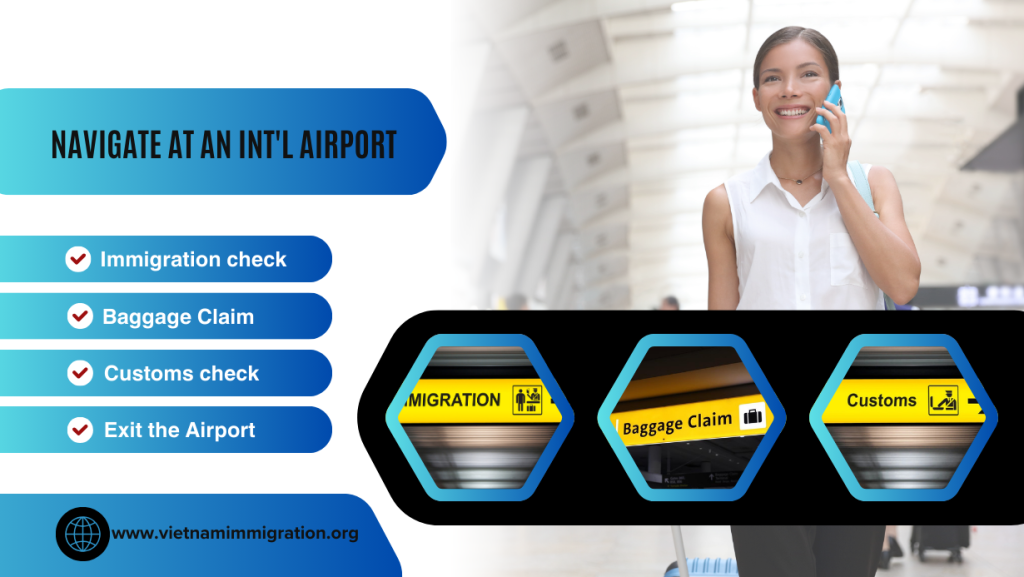
The process of navigating a Vietnamese international airport for e-visa holders and visa-free visitors is generally characterized by its straightforwardness. A step-by-step outline is provided below:
Upon disembarkation from the aircraft, travelers should proceed by following directional signage indicating “Arrivals” or “Immigration.” Progression to the designated immigration counters will then commence.
Following successful immigration clearance, travelers should proceed to the baggage claim area. Electronic display screens should be consulted for the specific flight number to identify the correct baggage carousel.
With retrieved luggage, individuals will then transition through the customs checkpoint.
Upon clearance through customs, individuals will egress into the arrival hall. This area provides access to various services, including currency exchange facilities, official taxi dispatch counters, designated pick-up points for ride-hailing applications, and airport transfer services. From this point, onward travel to accommodation can commence, thereby initiating the exploration of Vietnam.
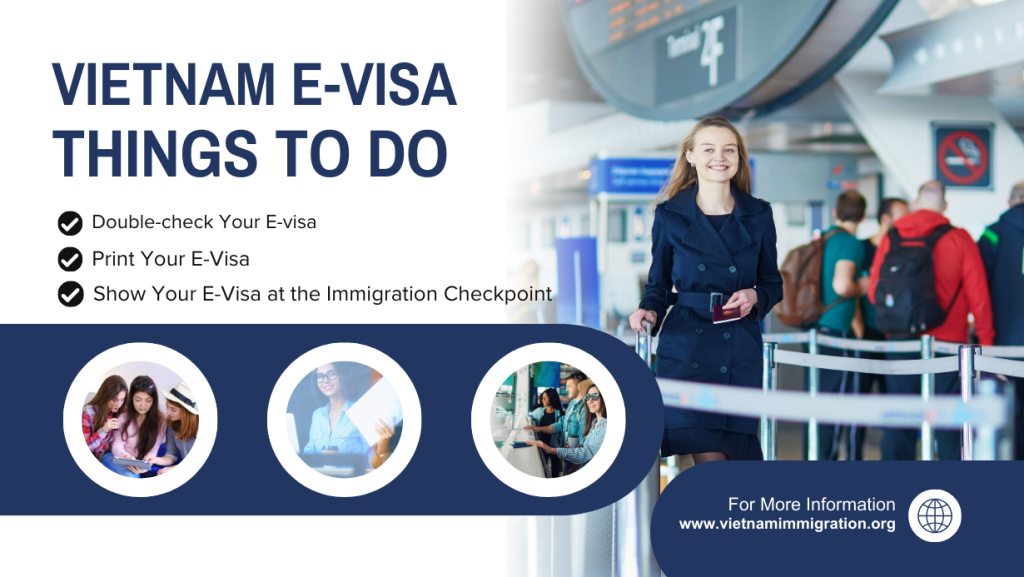
While the arrival process is inherently designed for efficiency, several important considerations warrant attention:
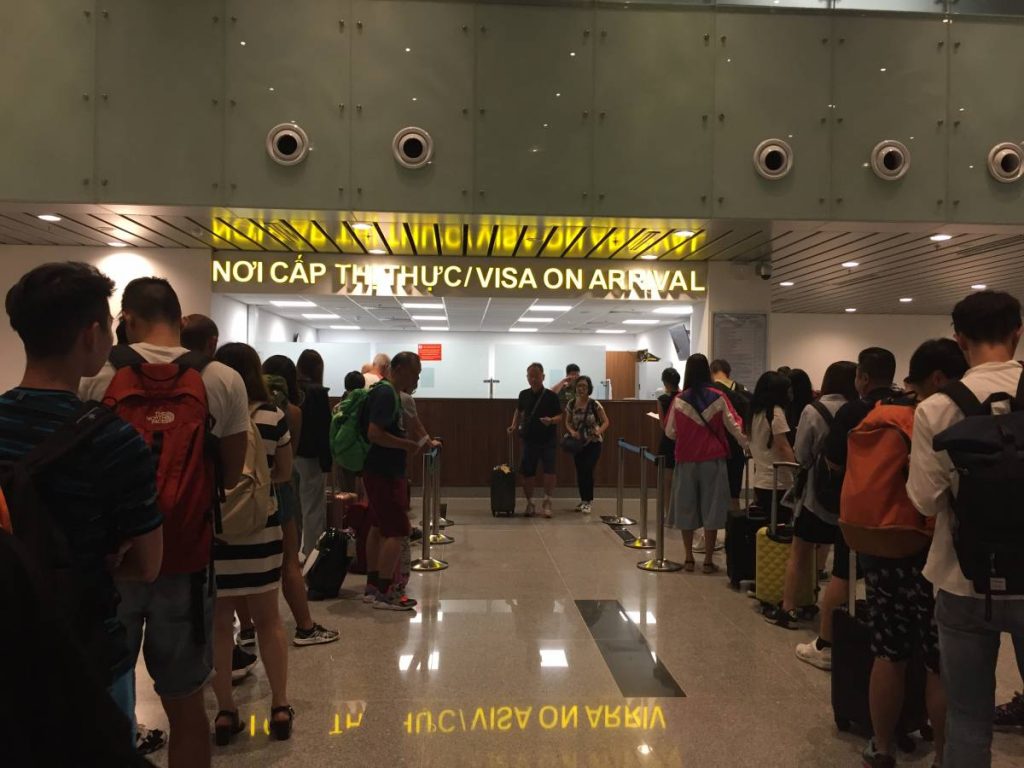
For individuals holding a visa-on-arrival, the airport arrival process entails an additional, critical step. The navigational sequence is detailed as follows:
Subsequent to disembarking the flight, travelers should follow directional signage for “Visa-on-Arrival” or “Landing Visa.” This counter is strategically located prior to the main Arrival Immigration Checkpoint.
At this counter, applicants are required to submit their passport, the diligently completed NA1 form with the affixed passport-sized photograph, the visa-on-arrival approval letter, and the requisite visa stamping fee in cash (USD or VND).
Official personnel will then process the visa, affixing it to the passport (typically as a sticker), whereupon the traveler may proceed. It is important to note that extended queues may materialize at this particular counter.
Once the visa has been successfully issued and affixed within the passport at the landing visa counter, the traveler will then proceed to the main Arrival Immigration Checkpoint. Presentation of the passport (now containing the visa sticker) to the immigration officer is required for final entry processing and stamping.
Following immigration clearance, individuals should proceed to the baggage claim area to retrieve their checked luggage.
With retrieved luggage, passage through the customs checkpoint will occur, with adherence to either the green or red lane based on declared items.
Ultimately, individuals will exit into the airport’s arrival hall, thereby commencing their journey in Vietnam.
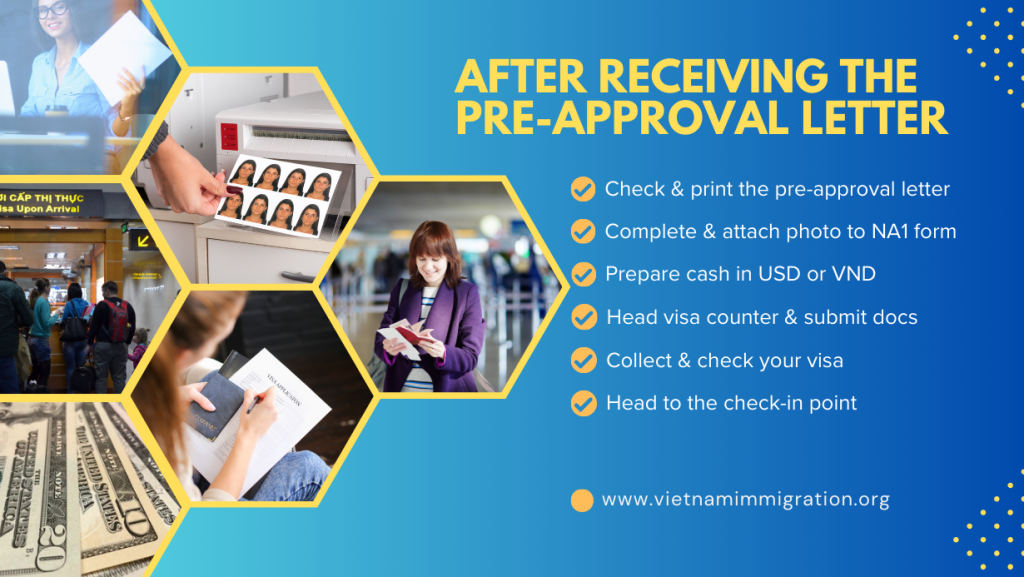
This additional procedural step for VOA holders necessitates particular attention:
The landing visa counter constitutes the absolute initial destination upon arrival. It is imperative not to bypass this step and proceed directly to immigration.
Heightened preparedness directly correlates with expedited processing at this stage. It is crucial to have the following items readily available:
Similar to immigration, the landing visa counter may experience substantial queues, contributing to the overall arrival duration. This often represents the most significant waiting period for VOA holders.
In instances where a passport-sized photograph or sufficient cash is unavailable, the Arrival Fast Track Service can provide immediate assistance to rectify these deficiencies upon arrival, facilitating the completion of the NA1 form and ensuring readiness for visa issuance.
Extended waiting periods, particularly subsequent to a prolonged international flight, can be considerably arduous. Fortunately, it is possible to circumvent these queues and experience a notably swifter, more comfortable arrival at an international airport in Vietnam. This is precisely the function of the Arrival Fast Track Service.
This service is specifically engineered to bypass the common waiting times at both the Arrival Immigration Checkpoint for all travelers and, crucially, at the Landing Visa Counter for visa-on-arrival holders. It effectively transforms a potentially frustrating arrival into a streamlined, premium entry experience.
The Arrival Fast Track Service is meticulously structured to deliver a seamless and efficient arrival process. The operational breakdown is as follows:
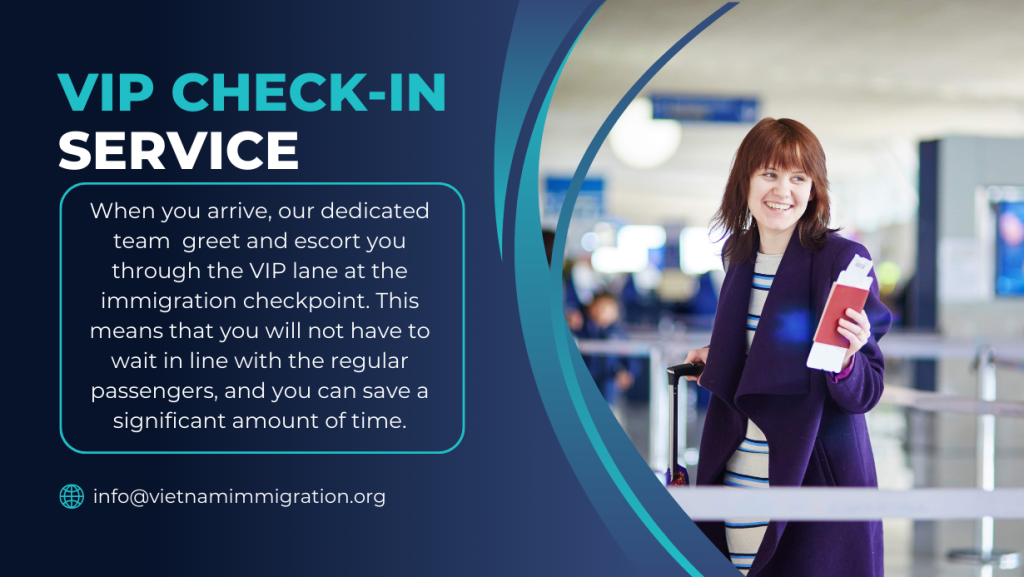
Upon the arrival of the flight, dedicated professional personnel will await the traveler directly at the aircraft’s gate or at the skywalk entrance, displaying a personalized welcome sign bearing the traveler’s name. Their clear identification ensures minimal time expended in searching.
👉 For E-visa holders and Visa-free visitors: The designated team will promptly escort the traveler through the priority lanes at the Arrival Immigration Checkpoint. This procedure allows for circumvention of standard, often protracted queues, resulting in significant time savings.
👉 For Visa-on-Arrival holders: The team assumes responsibility for the critical initial procedural step. They will escort the traveler directly to the landing visa counter, where they will manage the process of visa collection. This comprehensive assistance includes verifying the correct completion of the NA1 form, ensuring the photograph is affixed, and facilitating the payment of the stamping fee. Their expertise enables expedited navigation of this process, thereby minimizing queues and procedural complexities.
Subsequent to visa processing (for VOA holders) and/or immigration clearance, the team will continue to assist with any further requirements, such as guidance to baggage claim, customs, and ultimately directing the traveler to pre-arranged transportation or the airport exit.
Fundamentally, the team functions as a personal guide and expediter, ensuring progression through airport formalities with maximum efficiency and minimal discomfiture.
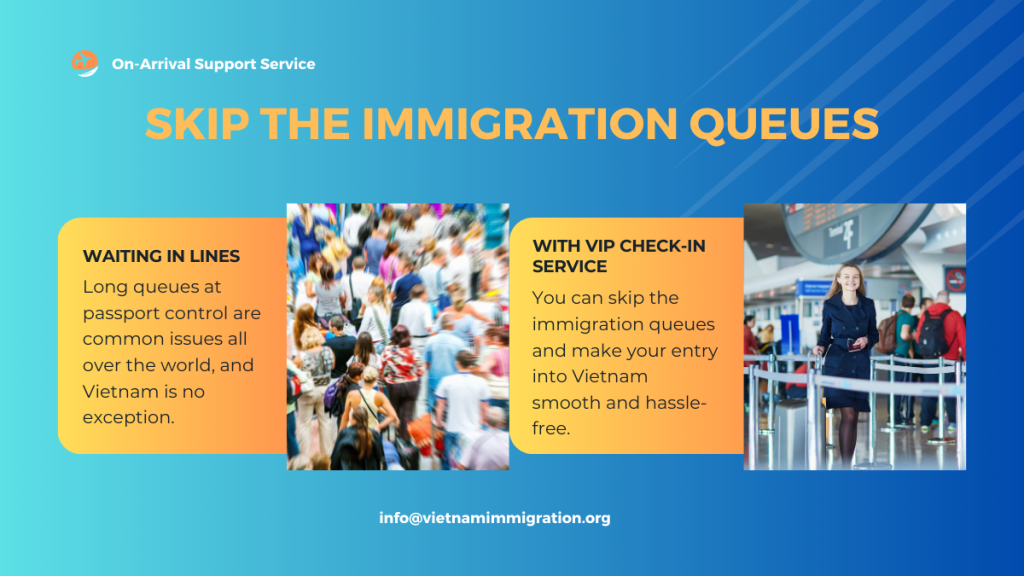
The election of the Arrival Fast Track Service confers a multitude of advantages that profoundly enhance the travel experience:
This constitutes the most immediate and quantifiable benefit. Through the utilization of priority immigration lanes and expedited processing at the visa-on-arrival counter, waiting times can be reduced from potentially several hours to a mere matter of minutes. This enables disembarkation and completion of airport formalities in a fraction of the time required for standard passengers.
Protracted queues, particularly after an arduous international flight, can induce considerable stress. The service completely mitigates this burden. Travelers are absolved of concerns regarding unfamiliar airport layouts, comprehension of local procedures, or potential language barriers.
From the initial meet-and-greet at the gate, individuals will experience a premium level of service. The dedicated team provides personalized attention, rendering the arrival experience both exclusive and comfortable.
For visa-on-arrival holders, the visa collection procedure can be complex. The team manages this process, ensuring all your documents (NA1 form, photo) are in order and assisting with the stamping fee payment. This is particularly valuable if a traveler arrives without a passport-sized photograph or the precise cash amount for the stamping fee, as the team can facilitate the immediate resolution of these exigencies on-site.
Rather than independently ascertaining subsequent steps, the team provides smooth guidance through each phase of the arrival process—from aircraft disembarkation to immigration, baggage retrieval, customs clearance, and ultimately to the exit.
The assurance of professional on-site assistance provides substantial peace of mind, particularly for first-time visitors, families traveling with young children, or individuals operating under stringent connecting flight schedules.
By significantly reducing the duration spent on airport formalities, valuable time is conserved, allowing for immediate relaxation, settling into accommodation, and commencing the exploration of Vietnam. This obviates the expenditure of hours in queues that could otherwise be dedicated to enjoying the vacation.
The booking process for the Arrival Fast Track Service is characterized by its straightforwardness and efficiency, designed to maximize client convenience:
Access the dedicated booking form for the Arrival Fast Track Service on the Vietnamimmigration.org website. It is necessary to provide pertinent details, including full name, passport information, flight specifics (arrival date, time, flight number), and the designated international airport of arrival in Vietnam. Meticulous accuracy in information provision is crucial to avert potential issues.
Upon successful completion of the form, progression to a secure payment gateway will occur. Diverse payment options are provided for your convenience.
Following successful payment, a confirmation email will be dispatched. This email will contain vital booking details, such as the designated meeting point at the airport, contact information for the local team, and any specific instructions relevant to the individual’s arrival. This serves as the essential guide for utilizing the service.
The entire booking protocol is engineered for optimal user experience and efficiency, enabling the advance securing of the fast-track experience prior to the commencement of the journey.
The selection of a reputable service provider is of paramount importance, particularly concerning critical travel formalities. Confidence in Vietnamimmigration.org for the provision of Arrival Fast Track Service is warranted due to several compelling factors:
Vietnamimmigration.org boasts an operational history exceeding 15 years within this specialized domain. The active status of the domain, vietnamimmigration.org, since 2008, serves as demonstrable evidence of a sustained commitment to assisting international travelers. This can be corroborated by reviewing the whois record at https://www.whois.com/whois/vietnamimmigration.org/.
The quality of service provided is unequivocally affirmed through a 100% money-back guarantee, thereby furnishing financial security and assurance to clients. Detailed information concerning this refund policy is available at https://www.vietnamimmigration.org/refund-policy/.
All transactions are processed through PayPal, which incorporates robust buyer protection policies. This ensures transaction security and affords clients the benefits of PayPal’s commitment to safeguarding purchases. Further details regarding PayPal’s buyer protection are accessible at https://www.paypal.com/vn/webapps/mpp/paypal-buyer-protection.
Prospective clients are encouraged to review independent testimonials reflecting the satisfaction of prior customers with the service provided. These reviews are available on SiteJabber: https://www.sitejabber.com/reviews/vietnamimmigration.org. Such endorsements collectively underscore the commitment to exceptional service delivery and client contentment.
The on-ground team stationed at Vietnamese international airports comprises highly experienced professionals possessing profound knowledge of local airport procedures and regulations. Their dedication to providing efficient and courteous assistance is unwavering.
These aforementioned factors collectively establish a robust foundation of trust and reliability, affirming the judiciousness of electing the Arrival Fast Track Service offered by Vietnamimmigration.org.
Beyond the fundamental preparations and the advantages of the Fast Track Service, the following supplementary advice is offered to further enhance the smoothness of your arrival in Vietnam:
By adhering to these guidelines and considering the advantageous convenience offered by the Arrival Fast Track Service, travelers can anticipate an exceptionally smooth and gratifying commencement to their Vietnamese odyssey. The commitment is to render arrival in Vietnam as effortless as feasible, thereby enabling immediate immersion in the nation’s profound beauty and rich cultural heritage.


Infographic: Navigating Vietnam’s Airports Escape the Airport Queue Your visual guide to a faster, stress-free arrival in Vietnam. See exactly how much time you’ll save.


Your flight has landed in Vietnam, and an incredible adventure awaits. But standing between you and your first bowl of phở is the one thing every traveler dreads: the airport immigration hall.

Vietnam Arrival Fast Track | Interactive Guide VietnamArrivals Book Fast Track Skip the Queue. Start Your Vietnam Adventure Faster.